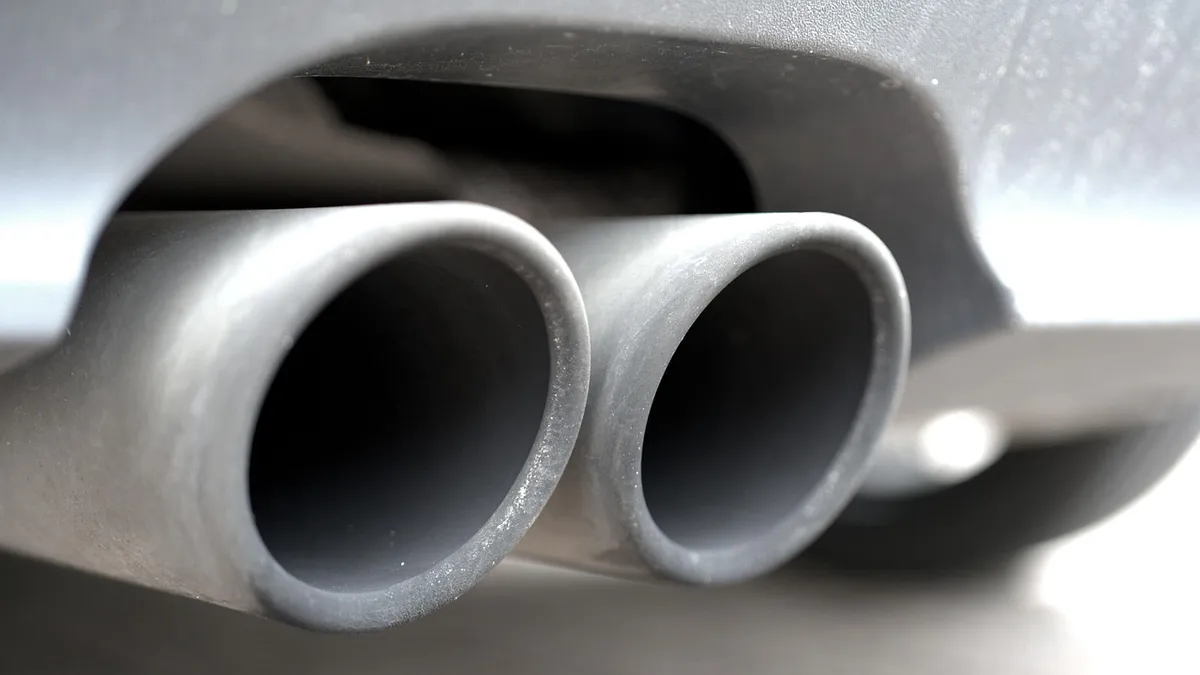

P0420 means your vehicle’s OBD2 system detected that the catalytic converter on Bank 1 (the side with cylinder 1) is converting exhaust gases less efficiently than its required threshold. It does not automatically mean the converter has failed. Check for other codes, exhaust leaks, and live oxygen sensor data first — in that order — before paying for a new converter.
- P0420 is a generic, SAE-standardized code: “Catalyst System Efficiency Below Threshold (Bank 1).” A P0430 is the identical code for Bank 2 on engines that have one.
- The code compares the upstream and downstream oxygen sensor signals on Bank 1. It does not, by itself, prove the converter is bad.
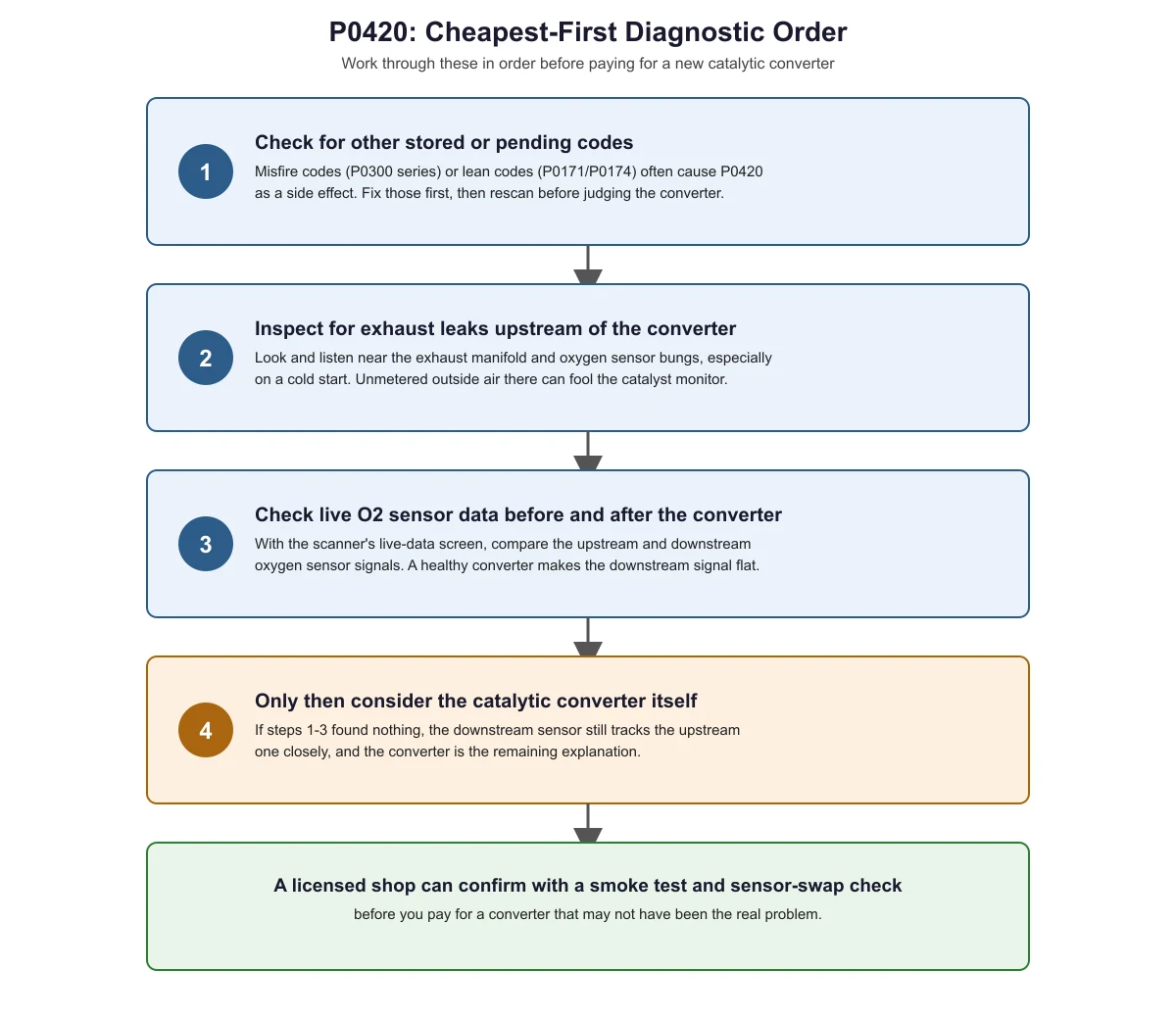
- Work cheapest-first: other stored or pending codes, then exhaust leaks, then live O2 sensor data, and only then the converter itself.
- Several cheaper problems — a misfire, a lean condition, a leaking exhaust gasket, or a failing oxygen sensor — can trigger the same code as a dying converter.
- A real catalytic converter replacement is a safety- and emissions-relevant repair. Have a licensed mechanic confirm the diagnosis before paying for the part.
What Does the P0420 Code Mean?
P0420 is one of the generic powertrain diagnostic trouble codes defined by the SAE J2012 standard, which every OBD2-compliant vehicle sold in the United States since 1996 is required to support. Under that standard, P0420 is defined simply as “Catalyst System Efficiency Below Threshold,” applied to Bank 1 — the engine bank that contains cylinder number 1. On a V6 or V8 engine with two separate exhaust banks, the same problem on the other bank sets P0430 instead; on an inline engine with only one bank, “Bank 1” can be dropped from the description because there is no other bank to confuse it with.
In plain terms, your engine computer is comparing what an oxygen sensor reads before the catalytic converter to what a second oxygen sensor reads after it. A converter that is working correctly smooths out and reduces the oxygen swings in the exhaust as it does its job. When the downstream sensor’s readings start looking almost as active as the upstream sensor’s, the computer concludes the converter is no longer cleaning up the exhaust well enough, and it sets P0420.
If you’re still getting familiar with your scan tool, our first-time scanner guide covers how to pull codes like this one in the first place.
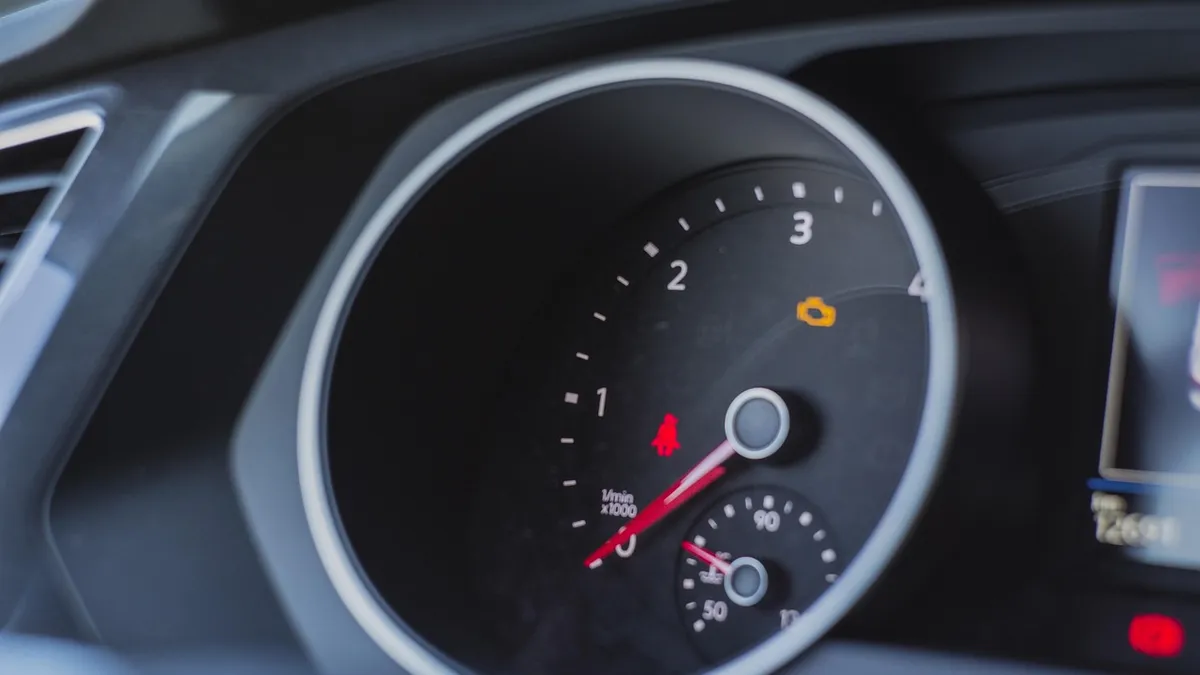
Does P0420 Always Mean the Catalytic Converter Has Failed?
No. P0420 is a symptom of reduced catalyst efficiency, not a direct measurement of the converter’s physical condition, and several other problems can produce the same symptom. Under federal emissions regulations, the OBD system is required to catch catalyst deterioration before non-methane hydrocarbon emissions reach 1.5 times the applicable emissions standard, which is a deliberately sensitive trigger — it is meant to flag a converter long before it would cause a vehicle to fail a tailpipe emissions test outright. That sensitivity is also why things that have nothing to do with the converter’s own condition, like an exhaust leak feeding outside air past a sensor or a misfire dumping unburned fuel into the exhaust, can trip the same threshold.
That is exactly why a flat list of “possible causes” isn’t as useful as a diagnostic order. Several of the most common causes are far cheaper to fix than a converter, and ruling them out first can save a replacement that wouldn’t have solved the problem.
What Should You Check First? A Cheapest-First Diagnostic Order
Work through these four checks in order. Each one is cheaper and faster to rule out than the one after it, and finding a problem at an earlier step means you can very likely skip the later ones.
| Step | What to check | Why it comes first |
|---|---|---|
| 1. Other codes | Scan for any other stored or pending codes, especially misfire codes (P0300-P0308) or lean-condition codes (P0171/P0174) | These conditions push unburned fuel or extra oxygen into the exhaust, which can trip the catalyst monitor even on a healthy converter. Free to check, and fixing them may clear P0420 on its own. |
| 2. Exhaust leaks | Visually inspect and listen near the exhaust manifold, the pipe joints, and the oxygen sensor bungs, especially right after a cold start | A leak upstream of the downstream oxygen sensor lets outside air reach it, making the converter look less efficient than it is. A visual and listening check costs nothing but time. |
| 3. Live O2 sensor data | With the scan tool’s live-data screen, watch the upstream and downstream oxygen sensor signals at a steady highway cruise | This directly tests the thing the code is about. If the downstream signal is already flat and well-behaved, the sensors and converter are likely fine and the cause is elsewhere. Needs only the scanner you already have. |
| 4. The converter itself | Have a licensed shop confirm converter condition (and rule out a failing downstream sensor) before replacing it | Converters are the most expensive part in this chain. This step only makes sense once steps 1-3 found nothing, since a new converter on top of an undiagnosed leak or misfire will often just set P0420 again. |
How Do You Check Live O2 Sensor Data for P0420?
Most scan tools that read live data label the two Bank 1 oxygen (or air-fuel ratio) sensors as something like “O2 Sensor B1S1” (upstream, before the converter) and “O2 Sensor B1S2” (downstream, after the converter). Drive the car to full operating temperature, hold a steady speed on a safe road, and watch both signals on the scanner at the same time.
The upstream sensor should swing back and forth fairly quickly and regularly as the engine’s fuel control adjusts. The downstream sensor, behind a converter that is doing its job, should stay comparatively flat and slow-moving, since the converter is supposed to smooth out those swings before the exhaust reaches it. If the downstream signal is instead swinging in a pattern that closely tracks the upstream one, that matches what the catalyst efficiency monitor is built to detect, and it points toward the converter (or a downstream sensor reading the exhaust inaccurately) rather than something further upstream.
This step does not replace a professional inspection, but it tells you whether it’s even worth paying someone to look at the converter, or whether the live data instead points back to step 1 or step 2. It’s also worth pulling the code’s freeze frame data before you do anything else, since it records what the engine was doing (speed, load, fuel trim) at the exact moment P0420 set, and that context can support what the live data shows.
When Should You See a Licensed Mechanic?
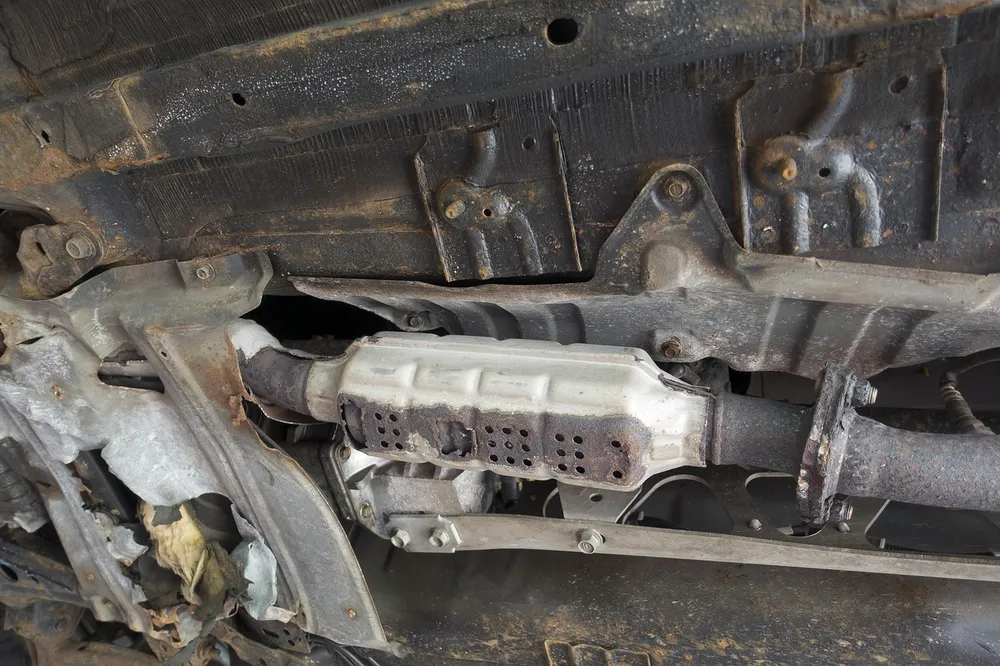
Bring the car in once you’ve worked through steps 1-3 and the evidence points at the converter itself, or sooner if any of the following apply:
- You smell strong exhaust fumes, hear a rattle from underneath the car, or notice reduced power. These can indicate a physically damaged or partially clogged converter, which is a safety and drivability issue, not just a code.
- You don’t have a way to safely get under the car to inspect for leaks. Exhaust components run hot and the car needs to be properly supported; a shop has a lift for this.
- The live O2 data is inconclusive or you’re not confident reading it. A shop can also run a smoke test to find small exhaust leaks that are hard to hear, and can test the downstream oxygen sensor itself before condemning the converter.
- Your vehicle needs to pass a state emissions or safety inspection. A catalytic converter is emissions equipment; replacing it with the wrong part, or removing it without a replacement, can be illegal in many states regardless of who does the work.
Replacing a catalytic converter is rarely a simple DIY swap: the pipe joints are often rusted together, the part must match your emissions certification for your specific vehicle, and in several states an aftermarket converter must carry a CARB or EPA-compliant label to be legal to install. A licensed mechanic can confirm the diagnosis, source a compliant part, and make sure the repair is done in a way that won’t set the same code again or fail inspection.
Frequently Asked Questions
Will clearing a P0420 code make it go away for good?
Only if the underlying cause is gone. Clearing the code with a scan tool turns off the check engine light immediately, but if the exhaust leak, misfire, or converter problem is still there, the catalyst monitor will run again on a future drive cycle and the code will come back. Our guide on why the check engine light returns after clearing a code covers the typical timeline for that.
Can a bad oxygen sensor cause a P0420 code instead of a bad converter?
Yes. If the downstream oxygen sensor itself is failing or reading inaccurately, it can send a signal that looks like the converter has lost efficiency even when the converter is fine. That’s part of why checking live O2 data before replacing parts matters: a new sensor is far cheaper than a new converter.
Is it safe to keep driving with a P0420 code?
Usually yes for a short time if the check engine light is steady (not flashing) and the car otherwise drives normally, but don’t put it off indefinitely. A failing converter can eventually restrict exhaust flow and hurt performance and fuel economy, and in many states it will also cause the car to fail an emissions inspection.
Does a P0420 code mean my car will fail emissions testing?
Not necessarily right away, but it can. The federal standard behind this monitor is written so the code is meant to trigger before converter wear gets bad enough to fail a tailpipe emissions test, so a confirmed P0420 is a warning sign worth addressing before your next required inspection, not after.
Why does my scanner show P0420 and P0430 together?
Those are the same underlying problem reported on both exhaust banks: P0420 is Bank 1 (the side with cylinder 1) and P0430 is Bank 2. Seeing both at once often points to something affecting the engine broadly, like a widespread lean condition or a common fuel-system issue, rather than two unrelated converter failures.
Sources
- SAE International, J2012: Diagnostic Trouble Code Definitions (2002 edition, archived text) — definition of P0420/P0430 and Bank 1/Bank 2 numbering — checked November 2026
- U.S. EPA regulation, 40 C.F.R. § 86.1806-05(b)(1)(i), Onboard diagnostics (as reproduced by FindLaw) — catalyst monitor malfunction criteria (1.5x the NMHC standard) — checked November 2026
autoscanguide.com Editorial Team. Last updated: November 12, 2026.

1 COMMENTS